Your First Communication With a Logo Design Agency: What to Expect
Logo design services for US businesses often begin with a simple conversation about your business, your customers, and the kind of brand identity you want to build. Your first communication with a logo design agency is more than just discussing colors, fonts, or whether you want an icon next to your business name.
You don’t need to arrive with every design decision already made—that’s part of what you’re hiring a professional logo designer for. But having some basic information ready can make your first conversation much more productive.
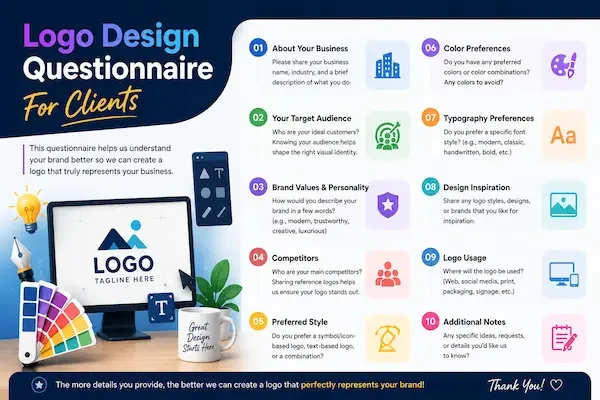
Here’s what you should prepare, what you should discuss, and what you can expect when communicating with a logo design agency.
How to Prepare for Your First Conversation With a Logo Design Agency
Before you contact an agency, spend a little time thinking about your business rather than jumping straight into colors and symbols.
A useful starting point is a simple brand brief. Adobe recommends defining your business, audience, brand values, personality, competitors, and intended applications before beginning the design process.
You do not need a complicated document. A few clear answers can give your designer a much better starting point.
Define Your Business and Logo Design Goals
Start with the basics.
What does your business offer? Who do you serve? What makes your business different from competitors?
These questions may seem obvious because you already know the answers. Your designer, however, is coming into the project without the years of knowledge you have about your business.
Try explaining your business in a few simple sentences. Then think about what you want the logo to accomplish. Perhaps you are launching a new company, updating an existing identity, or creating a more professional image.
The clearer the goal, the easier it is to discuss the right direction for your logo.
Know What You Want From Your Custom Logo Design
You do not have to tell the designer exactly what the logo should look like.
Instead, think about the feeling you want it to create.
Should your business look modern or traditional? Friendly or serious? Simple or bold? Premium or approachable?
If you already have examples of logos you like, save them. They can help you explain your preferences even when you do not know the technical design terminology.
Identify Your Target Audience and Brand Style
A logo is created for the people who will see and use your brand, not simply for the business owner.
Think about your main customers and what kind of visual style is likely to make sense for them. Also consider how you want your business to be positioned compared with competitors.
Looking at competing brands can help you understand the visual conventions of your industry and identify opportunities to stand apart.
The goal is not to copy another business. It is to understand what already exists before deciding where your brand should fit—or stand out.
How to Communicate With a Professional Logo Designer
Once the conversation starts, try not to turn it into a list of design instructions.
A professional logo designer needs to understand the problem before deciding on the visual solution.
Talk about your business, your customers, your goals, and the personality you want the brand to communicate. Then give the designer room to use their expertise.
Explain Your Business and Design Requirements Clearly
Tell the designer what your business does and why customers choose you.
If there is something distinctive about your business, mention it. A particular audience, service, positioning, or business value may influence the creative direction.
Also explain where you expect to use the logo. It could appear on your website, social media profiles, packaging, signage, uniforms, business cards, or other marketing materials.
Knowing the intended applications helps designers think about how the logo needs to work in different situations.
Share Your Ideas, Preferences, and Inspiration
If you have ideas, share them.
If you dislike certain colors, type styles, symbols, or visual approaches, mention those too. You can also provide examples of logos that appeal to you and explain what you like about them.
For example, saying “I like this logo because it feels clean and trustworthy” gives the designer more useful information than simply saying, “Make mine look like this.”
Inspiration can help establish a visual direction, but your designer should still develop an identity that fits your own business rather than copying another company’s design.
Discuss Your Expectations for the Logo Design
This is also the right time to discuss practical expectations.
Ask how the design process works, how feedback is handled, what the project includes, and what you will receive at the end.
It is much easier to clarify these things before the work begins than after the first concepts have already been created.
Questions to Ask a Logo Design Agency
Your first conversation should not be one-sided.
You are also evaluating whether the logo design agency is the right fit for your business.
Ask questions about the process, deliverables, revisions, timing, pricing, and responsibilities. You do not need to ask dozens of questions. Focus on the things that could affect the project.
What Is Included in Your Logo Design Services?
Different agencies may structure their services differently, so ask what is actually included.
You might ask:
- How many initial concepts will I receive?
- How are revisions handled?
- What is included in the quoted price?
- Are additional changes charged separately?
- What final files will I receive?
- Are brand guidelines included?
Do not assume that every logo design package includes the same things.
How Does the Custom Logo Design Process Work?
Ask the agency to walk you through the process.
You may want to know how they gather information, develop concepts, present designs, collect feedback, and finalize the chosen direction.
This gives you an idea of what your involvement will be and when you will need to make decisions or provide approvals.
What Files and Revisions Will You Receive?
File formats matter because your logo may eventually appear in many different places and sizes.
For flexible, scalable use, vector formats such as SVG and AI are useful because vector artwork can be scaled without losing quality.
Ask the agency exactly what files are included and whether revisions are limited.
It is also worth asking about ownership and source files. These details should be clearly understood rather than assumed.
What to Provide to Your Logo Designer
The designer can only work with the information they have.
You do not need to prepare a perfect creative brief, but providing useful background information can save time and make the conversation more focused.
Think of it as giving your designer a map before asking them to choose a direction.
Business Information and Brand Details
Start with the essentials:
- Business name
- Products or services
- Target customers
- Main competitors
- Brand values
- Preferred personality
- Where the logo will be used
- Any existing branding
If you already have colors, typography, marketing materials, or an existing logo, share them.
A logo does not exist in isolation. It needs to work as part of the broader visual identity of the business.
Logo Ideas, Examples, and Design Inspiration
You can also create a small collection of examples.
Show the designer logos, colors, typography, or visual styles that you like. More importantly, explain why you like them.
You can also show examples you dislike.
This does not mean you are designing the logo yourself. You are simply helping the designer understand your preferences.
Brand Colors, Fonts, and Existing Marketing Materials
If your business already has established colors, fonts, packaging, website graphics, business cards, or other marketing materials, provide them.
This gives the designer useful context and can help the new logo work with the identity you already have.
If you are starting from scratch, that is fine too. Just tell the designer that there is no existing visual system to follow.
What to Expect From Professional Logo Design Services
Once the first conversation is complete, the next stage should become clearer.
You should understand what happens next, what the agency needs from you, and when you can expect to review the work.
The exact process will vary between professional logo design services, but clear communication should remain important throughout the project.
Discussing Timeline, Pricing, and Deliverables
Make sure you understand the expected timeline, price, payment terms, number of concepts, revision process, and final deliverables.
Do not focus only on the cheapest quote.
A lower price may not include the same level of service, number of concepts, revisions, file formats, or other deliverables as another proposal.
A written scope or agreement can make expectations clearer for both sides.
Reviewing Initial Logo Concepts
When the first concepts arrive, take some time before reacting.
Instead of simply saying “I like it” or “I don’t like it,” explain what is working and what is not.
Is the typography right for your brand? Does the symbol feel appropriate? Does the overall direction fit your audience? Does the logo work at different sizes?
Good design feedback gives the designer information they can actually use.
Giving Feedback and Requesting Revisions
Remember that feedback is part of the process.
Be specific, but stay open to the designer’s reasoning. You may have a personal preference that does not necessarily serve your brand or audience.
For example, instead of saying, “I hate this font,” explain what feels wrong about it. Maybe it feels too formal, too playful, too heavy, or difficult to read.
That gives your professional logo designer something concrete to work with.
If several people are involved in approving the logo, it is also helpful to know who has the final decision.
A Final Step for US Businesses
If the logo will become an important business identifier in the United States, you may also want to think about trademark considerations.
The USPTO provides a federal trademark search system and explains that a proper clearance search considers existing marks that may be similar enough to create a likelihood of confusion.
This does not mean your logo designer is automatically responsible for clearing your trademark. It simply means trademark considerations are worth discussing early, particularly if you plan to protect the logo as a trademark.
The First Conversation Does Not Have to Be Complicated
You do not need to arrive at your first meeting with a finished creative brief, a perfect color palette, or a complete vision for your logo.
You simply need to explain your business clearly.
Tell the logo design agency what you do, who you serve, what makes you different, where the logo will be used, and what kind of personality you want your brand to have.
If you want a broader understanding of the logo design process, requirements, costs, and important decisions involved, our Your Handbook for Logo Design Services can help you prepare before starting your project.
Then ask questions, listen to the designer’s recommendations, and make sure you understand the process before moving forward.
That simple preparation can give your custom logo designer a much stronger starting point—and give your business a better chance of getting a logo that works beyond just looking good.
Ready to Discuss Your Logo Project?