How to Choose the Best Logo Design Services
The best logo design services in the USA should offer more than an attractive design. They should help you develop a logo that reflects your business, appeals to your target customers, and works consistently across websites, social media, packaging, and marketing materials.
Whether you're launching a startup, rebranding an established company, or opening a small business in the United States, choosing a logo design service requires careful consideration. A beautiful portfolio alone doesn't tell you how an agency handles research, revisions, ownership rights, or final deliverables.
This guide explains what to evaluate, which questions to ask, and how to recognize a logo design provider that fits your business goals and budget.
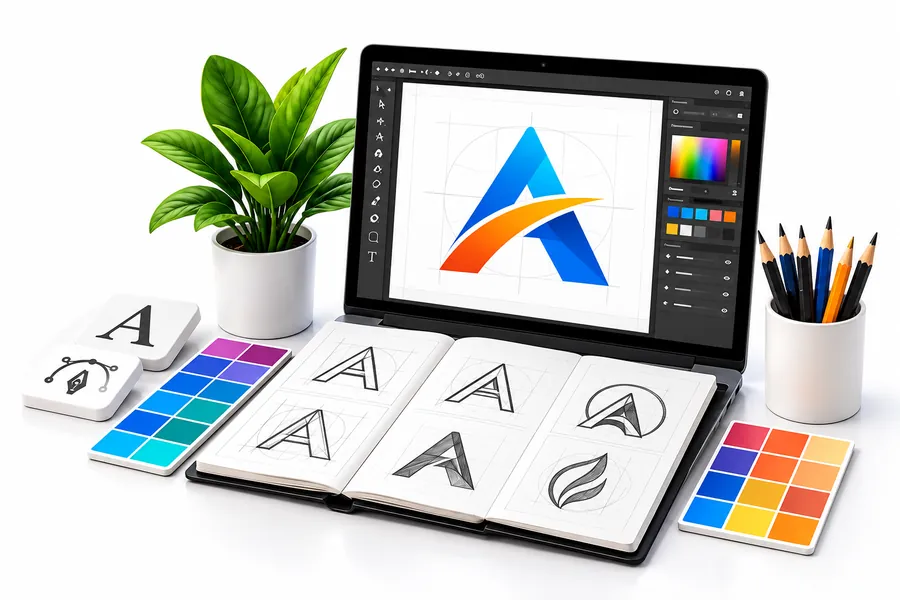
What you'll learn: How to evaluate custom logo design services, compare agencies, understand pricing and ownership, recognize warning signs, and make a confident hiring decision.
What Should You Look for in Professional Logo Design Services?
Professional logo design begins with understanding the business behind the name. Before creating concepts, a designer should learn about your customers, competitors, services, and the impression you want your brand to communicate.
A structured project may involve discovery, research, concept development, feedback, refinement, and final delivery.
However, not every provider includes the same services. Some focus exclusively on creating a logo, while others offer broader brand identity packages.
The key is understanding exactly what you're purchasing before making a commitment.
Custom Design That Fits Your Business
Your logo should represent your business rather than simply follow a popular design trend.
For example, a law firm serving corporate clients may prefer a restrained visual identity, while a children's clothing brand might benefit from a more playful design direction. Neither approach is automatically better; suitability depends on the audience and brand positioning.
When evaluating custom logo design services, ask whether the designer develops original concepts based on your business requirements.
A thoughtful discovery process should consider your company's values, ideal customers, industry, competitors, and intended applications.
Relevant Experience and Portfolio Quality
A portfolio is one of the most useful resources for evaluating a logo designer, but don't judge it by appearance alone.
Examine whether the designer demonstrates versatility across industries and visual styles. Look at how individual logos perform on business cards, websites, storefronts, packaging, and social media profiles.
Real-World Application: Consider a plumbing company operating in Texas. Its logo may need to remain recognizable on service vehicles, employee uniforms, invoices, and mobile screens.
A design that looks impressive in a large presentation might become difficult to recognize when reduced to a small size.
That's why practical applications matter. Look for projects that demonstrate clear typography, appropriate visual choices, consistent execution, and adaptability.
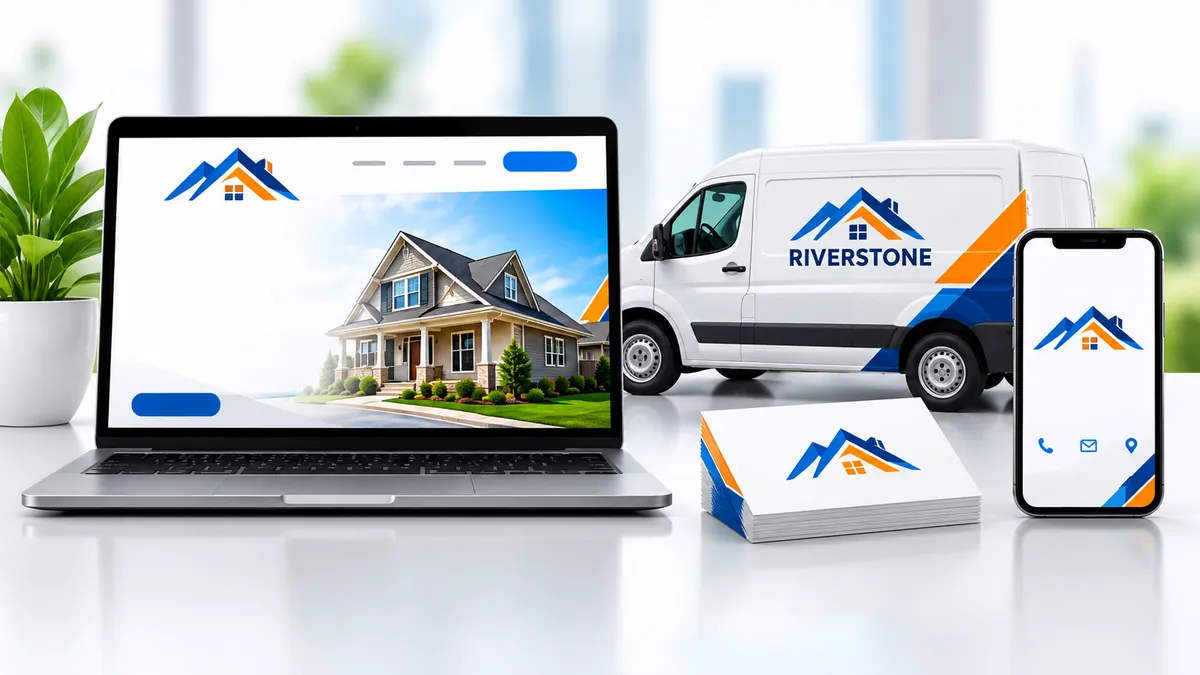
A strong portfolio should help you understand not only what the designer creates, but how those designs might function in your own business.
How to Compare Logo Design Agencies in the USA
Once you've shortlisted several logo design agencies, compare their processes and working arrangements rather than relying solely on their promotional claims.
A smaller agency with a well-defined workflow may be a better fit for your project than a larger provider whose services exceed your requirements.
Start by requesting a written proposal describing the scope, timeline, design concepts, revisions, and deliverables.
Compare what each agency includes instead of evaluating the quoted price in isolation.
Project Scope
Confirm the design concepts, revisions, timeline, and final deliverables.
Communication
Discuss meeting availability, response expectations, and feedback arrangements.
Working Fit
Choose an agency whose workflow, availability, and services fit your needs.
For American businesses, communication arrangements are also worth discussing. If your designer works remotely or in another time zone, confirm meeting availability, response expectations, and how feedback will be exchanged.
A provider doesn't necessarily need a physical office in your city to deliver a successful project. What matters is whether the working arrangement meets your needs.
Reviews, Design Process, and Communication
Customer reviews and case studies can provide useful insight into an agency's professionalism.
Look for feedback discussing communication, responsiveness, revision handling, and whether the completed work matched the agreed scope.
What to Check in Reviews
- ✓ Communication and responsiveness
- ✓ How revisions were handled
- ✓ Whether deliverables matched expectations
- ✓ Evidence of completed projects
What to Ask the Agency
- ✓ Who will manage the project?
- ✓ Will you speak directly with the designer?
- ✓ How will feedback be collected?
- ✓ What happens after final approval?
Be cautious about relying entirely on testimonials displayed on an agency's own website. Where possible, compare them with independent reviews and documented project examples.
The Federal Trade Commission has established rules addressing certain deceptive review and testimonial practices, reinforcing why authentic customer feedback matters.
You should also understand how the design process works.
Initial Consultation
Creative Brief
Research
Concept Presentation
Client Feedback
Revisions
Final Approval
Final File Delivery
A typical workflow might include an initial consultation, creative brief, research, concept presentation, client feedback, revisions, approval, and final file delivery.
Ask who will manage your project and whether you'll communicate directly with the designer or through an account manager.
Clear communication makes it easier to provide meaningful feedback, resolve misunderstandings, and keep the project aligned with your expectations.
Understand Logo Design Pricing, Revisions, and Ownership
Logo design pricing can vary depending on the project's scope, the designer's experience, the number of concepts, revision arrangements, and additional branding deliverables.
Rather than assuming that a higher price guarantees better work, compare the actual services included in each quotation.
For example, one package might include a single initial concept and limited revisions. Another might include multiple concepts, alternate logo versions, and a broader visual identity system.
These packages aren't directly comparable unless you examine their deliverables.
Before Paying a Deposit
- 01 Design concepts: How many original directions will you receive?
- 02 Revisions: How many revision rounds are included, and what counts as a revision?
- 03 Delivery timeline: When will concepts be presented, and when should you expect the completed files?
- 04 Final formats: Will you receive appropriate vector and raster files for your intended uses?
- 05 Ownership: What intellectual property rights will transfer to your business, and when?
- 06 Additional charges: Are there fees for extra revisions, alternate versions, or future modifications?
Typical Logo Design Deliverables
Vector Files
SVG, EPS, or AI for suitable production workflows.
Transparent PNG
Useful for websites and digital applications.
Color Variations
Full-color, black, white, and other agreed versions.
Source Files
Editable files when included in your agreement.
Revisions
Feedback and refinements within the agreed scope.
Usage Rights
Ownership or licensing terms defined in writing.
Illustrative checklist only. Actual deliverables depend on the selected package and agreement.
Understanding File Formats
File formats deserve particular attention. Vector formats such as SVG, EPS, or AI can support resizing and further production work, depending on the software and application.
Raster formats such as PNG and JPEG are useful for specific digital or print purposes.
Ask whether editable source files, transparent-background versions, and appropriate color variations are included.
Copyright and Ownership Rights
Ownership is equally important.
Under US copyright law, commissioning and paying for creative work does not necessarily mean the customer automatically owns the copyright. The applicable agreement and legal circumstances determine the rights involved.
A written contract should clearly address copyright transfer or licensing, permitted usage, third-party assets, and any restrictions.
Trademark Considerations
Finally, consider trademark availability. The United States Patent and Trademark Office provides resources for searching potentially conflicting trademarks when evaluating a proposed mark.
A professional-looking logo isn't automatically eligible for trademark registration simply because it was custom-designed.
For important brand launches, professional legal guidance may be appropriate.
Before approving your logo: Make sure the final deliverables, revision limits, ownership terms, and permitted uses are clearly documented in your agreement.
Red Flags to Avoid Before Hiring a Logo Designer
Not every attractive offer represents good value. Certain warning signs deserve closer examination before you hire a designer.
If the provider cannot explain what you'll receive, you may encounter unexpected charges or disagreements later.
Avoid assuming that paying for the design gives you unrestricted rights to every element.
A designer should be able to discuss how proposed concepts relate to your business requirements.
Repeatedly missed responses or vague explanations before signing a contract may indicate difficulties during the project.
If examples appear inconsistent or questionable, ask whether the provider created them and what their involvement was.
Trademark registration depends on legal requirements and examination. A designer cannot guarantee approval simply by creating an original-looking logo.
A reliable provider should be willing to explain these details before you commit.
Your Final Checklist for Choosing a Logo Design Service
Before selecting your logo designer, review your shortlist against a consistent set of criteria.
| What to Check | What You Should Confirm |
|---|---|
| ✓ Business Understanding | The designer understands your audience, goals, and industry. |
| ✓ Portfolio | Relevant work and practical applications. |
| ✓ Design Process | Clear stages from discovery through delivery. |
| ✓ Communication | Defined contacts, feedback process, and expectations. |
| ✓ Pricing | Written scope and transparent additional costs. |
| ✓ Revisions | Number of rounds and conditions. |
| ✓ Final Files | Suitable formats and agreed deliverables. |
| ✓ Ownership | Clear copyright and usage terms. |
| ✓ Reputation | Credible reviews and verifiable work. |
Don't rush your decision simply because one provider offers the lowest price or promises unusually fast delivery.
Choose a service that demonstrates a practical understanding of your business and provides clear expectations from the beginning.
Make the Right Choice for Your Business
Your logo will appear wherever customers encounter your brand, from your website and social profiles to business documents and marketing materials.
Choosing the right logo design service means finding a provider who can balance visual creativity with practical business requirements.
Take time to review portfolios, discuss your goals, compare proposals, and understand exactly what you will own and receive.
For more guidance on planning, costs, and brand identity considerations, explore our USA Logo Design Handbook .
Additional US Resource: Before committing to a new brand identity, review the USPTO's official trademark search guidance to understand how to investigate potentially conflicting trademarks.