USA Business Branding Guide

Custom Logo Design Process: A Step-by-Step Guide for US Businesses

A memorable business logo starts long before a designer chooses a font, color, or symbol. It begins with understanding the business, identifying its audience, exploring creative directions, and developing a visual identity that works across different applications.

For American startups, small businesses, and established companies, understanding the custom logo design process makes it easier to communicate expectations, evaluate design concepts, and choose the right creative partner.

If you're considering working with a design agency, explore Digital Zone Consulting's best logo design services in the USA to learn about our service options for American businesses.

This guide explains the major stages of business logo development, what clients should prepare, and how to assess a finished logo before approval.
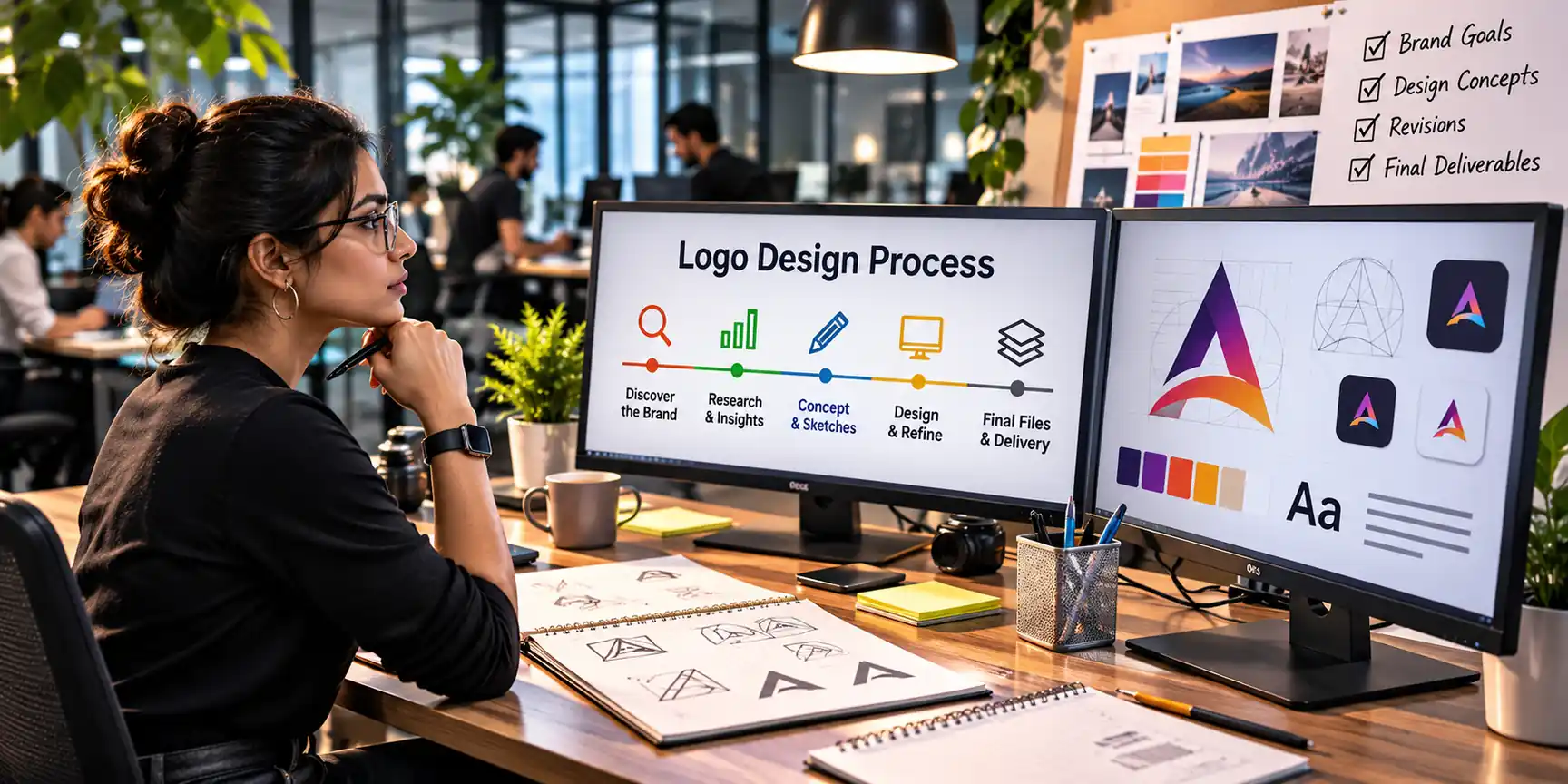
Custom logo design process for us businesses from brand research to final logo delivery
Discovery
Research
Concepts
Refinement
Delivery

Why Does a Structured Logo Design Process Matter?

A logo is a visual identifier that helps customers recognize a business. Its effectiveness depends on more than appearance.

The design must reflect the brand's positioning, suit its intended audience, and remain usable across different formats.

A structured workflow helps businesses and designers make decisions based on agreed objectives rather than personal preferences alone.

According to 99designs' design guidance, successful logo development involves understanding the brand, researching the industry, considering applications, exploring concepts, refining designs, and preparing suitable files.

For US businesses, this approach provides a practical framework for discussing design quality, deliverables, and expectations with a logo design agency.

Stage 1: Define the Business Identity Before Designing

The first stage of custom logo development focuses on discovering what the business represents.

Clarify Your Brand's Purpose and Positioning

Before requesting concepts, business owners should explain their products or services, target customers, brand personality, and competitive positioning.

For example, a financial consulting company might prefer a restrained visual identity, while a children's entertainment brand may require a more playful direction.

These are creative considerations, not fixed industry rules.

Useful questions include:

  • What does the business offer?
  • Who are its primary customers?
  • What makes it different from competitors?
  • What impression should its logo communicate?
  • Where will customers encounter the brand?

Prepare a Useful Creative Brief

A design brief connects business objectives with creative execution.

It can document preferred styles, existing brand assets, intended applications, deadlines, and required deliverables.

The clearer the brief, the easier it becomes to evaluate whether proposed designs meet the original requirements.

Stage 2: Explore the Market Without Imitating Competitors

A business logo should be appropriate for its industry while remaining distinguishable from other brands.

Industry research helps designers identify common visual conventions, recurring symbols, typography styles, and potential opportunities for differentiation.

Study Competitor Logos Critically

Consider the visual identities used by direct competitors and established businesses in related markets.

Instead of copying attractive elements, examine why particular design approaches might suit their audiences.

Look for frequently used shapes, color combinations, and visual metaphors.

The goal is to understand the competitive environment and develop a distinctive direction.

Consider Trademark Conflicts Early

For businesses operating in the United States, potential trademark conflicts deserve attention before committing to a final identity.

The United States Patent and Trademark Office recommends searching for similar marks and considering whether related goods or services could create consumer confusion.

A preliminary search can identify potential concerns, but it does not replace comprehensive trademark clearance.

Stage 3: Develop Creative Directions That Reflect the Brand

Once the research is complete, the creative exploration begins.

Designers can translate brand attributes into possible symbols, typography treatments, visual compositions, and conceptual directions.

Explore Ideas Before Selecting a Favorite

Early sketches allow designers to experiment without immediately committing to a polished digital result.

Different approaches might emphasize the business name, an abstract symbol, initials, or a combination of typography and imagery.

The strongest direction is not necessarily the most decorative. It is the one that communicates the intended identity clearly.

Evaluate Concepts Against the Brief

Each promising concept should be assessed against the business objectives established during discovery.

Consider whether it communicates the intended personality, feels distinguishable, and can function in the environments where the business will use it.
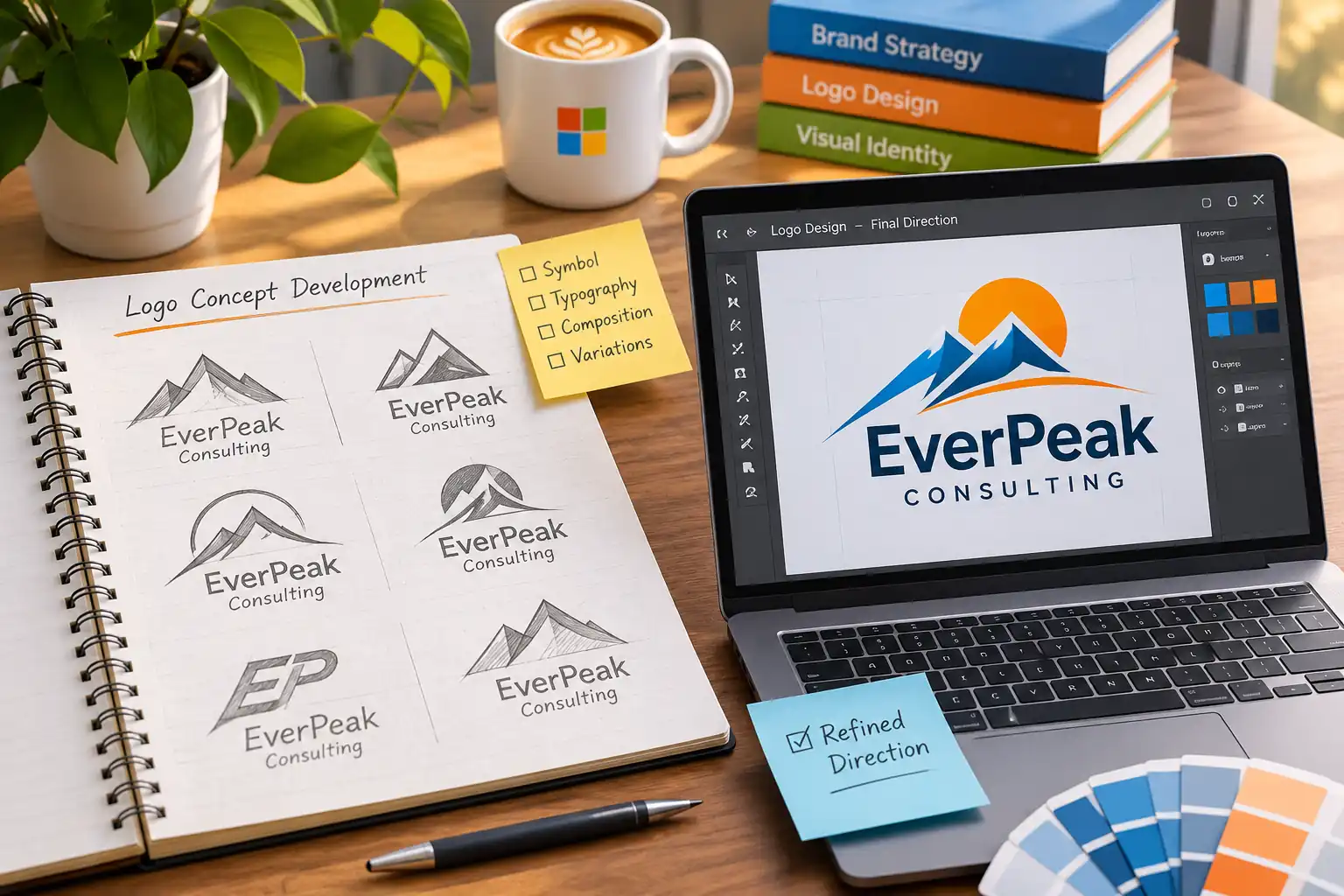
Business logo concept development with sketches and custom vector design exploration.
Business logo concept development: from original pencil sketches to a refined digital design direction.

Stage 4: Transform Selected Concepts Into Digital Designs

After identifying promising directions, designers develop them into more complete digital artwork.

Vector-based design is especially important because vector graphics can be resized without the quality loss associated with enlarging raster images.

Refine Typography, Shapes, and Color

This stage involves making detailed visual decisions.

Typography influences how the business name appears. Spacing and proportions affect balance, while color helps establish a consistent visual character.

Adobe's logo design guidance emphasizes simplicity, versatility, and vector artwork as important considerations.

A logo should also be assessed without color, since a strong visual identity may need to work in monochrome applications.

Preview the Logo in Business Applications

A digital logo should not be evaluated only on a blank design canvas.

Consider how it appears on a website header, business card, social media profile, packaging, signage, or other relevant materials.

These previews help reveal problems with legibility, proportions, or visual complexity.

Stage 5: Review the Design and Make Purposeful Revisions

Client feedback is an essential part of a collaborative logo design process.

The purpose of revisions is not simply to produce more variations. It is to improve how effectively the design meets the business brief.

Give Feedback That Designers Can Act On

Rather than saying a concept feels wrong, explain what appears inconsistent with the intended brand identity.

For example, a business might request stronger readability, a simpler symbol, or typography that better reflects its positioning.

Specific feedback makes revisions easier to interpret.

Avoid Conflicting Approval Decisions

Businesses with several decision-makers benefit from collecting feedback before sending consolidated instructions to the designer.

This reduces contradictory requests and helps maintain a coherent creative direction.

Before approving the final logo, review its readability, visual balance, adaptability, and consistency with the agreed objectives.

Stage 6: Check Logo Versatility Before Final Approval

A finished logo may be used in many environments, each with different technical and visual requirements.

A design that works on a large screen may become difficult to recognize when reduced to a small profile image.

Test Different Sizes and Backgrounds

Review the logo at large and small sizes, on light and dark backgrounds, and in monochrome.

Check whether the symbol remains recognizable and whether important text stays readable.

Prepare Appropriate Logo Variations

Depending on business requirements, a logo package may include horizontal and stacked arrangements, symbol-only versions, and different color treatments.

These variations should preserve a recognizable identity rather than introducing unrelated designs.
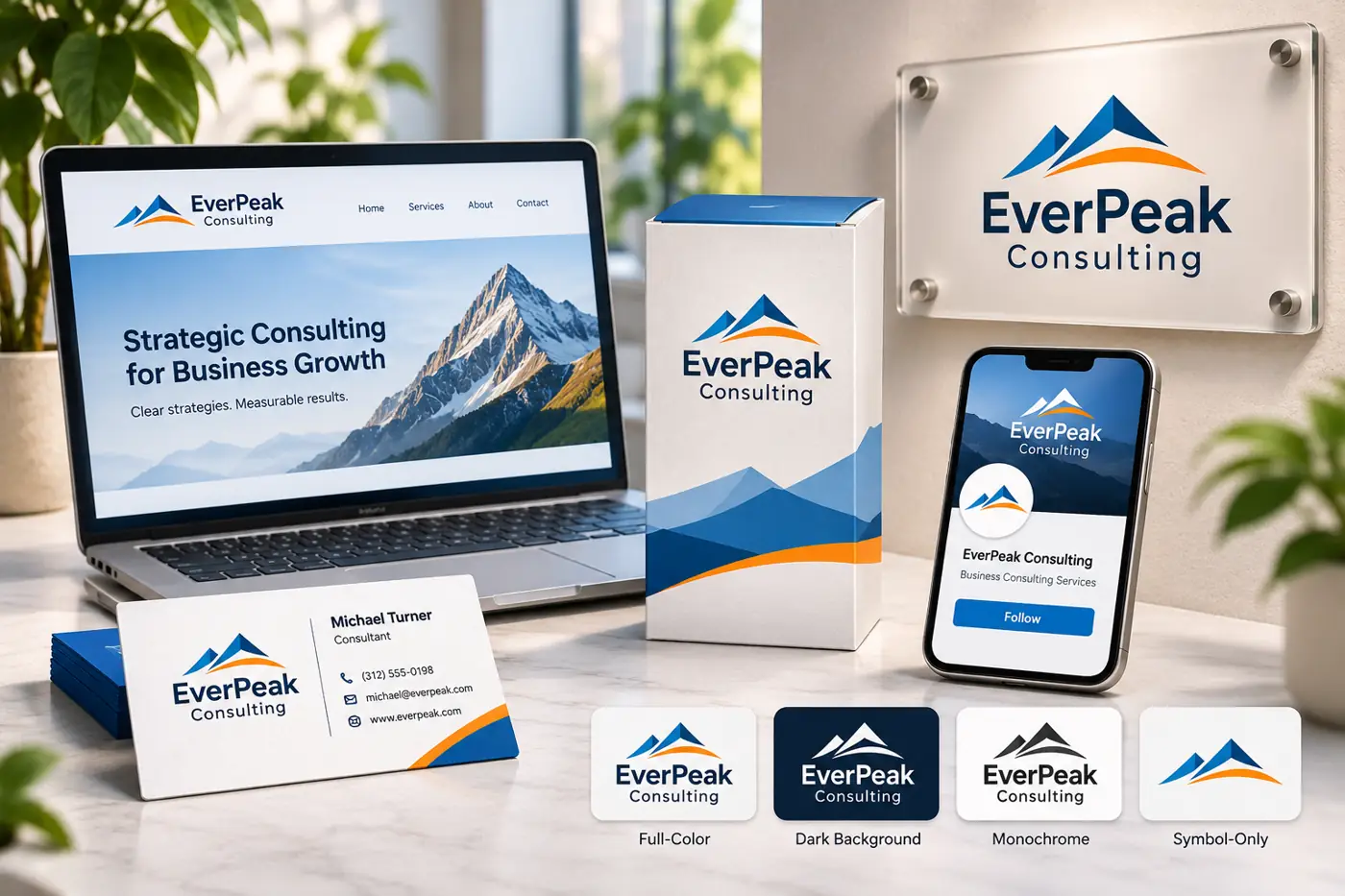
Custom business logo variations displayed across digital and printed branding materials.
One consistent business logo applied across websites, business cards, packaging, signage, and mobile screens.

Stage 7: Receive the Files Needed for Future Branding

The final handoff is an important part of the logo design process.

A business should know which files it will receive and how those files can be used.

Understand Common Logo File Formats

Different formats serve different purposes.

AI and EPS: Editable vector formats commonly used in design and production workflows.

SVG: Scalable vector format suitable for many digital applications.

PDF: Can preserve vector artwork and is often useful for sharing with printers or other vendors.

PNG: Raster format that supports transparent backgrounds.

JPG: Raster format commonly used for previews and applications that do not require transparency.

99designs' official handoff guidance identifies editable originals, vector files, and web previews among its logo delivery requirements.

Businesses should confirm their exact file needs before the project begins.

Clarify Ownership and Usage Rights

Before final payment and approval, review the agreement governing ownership, licensing, and permitted use of the finished artwork.

Also clarify whether any third-party fonts or graphic assets require separate licenses.

File delivery and intellectual-property rights are related but distinct matters.

How Long Should a Custom Logo Design Project Take?

Logo design timelines depend on the project scope, complexity, number of concepts, feedback requirements, and approval process.

A project involving extensive research and several stakeholders may require a different schedule from a simpler design assignment.

Businesses should discuss milestones before work begins, including concept presentation, revision rounds, final approval, and file delivery.

Concept Presentation
Revision Rounds
Final Approval
File Delivery

For a more detailed explanation, read our guide to how long logo design takes .

How Can US Businesses Choose the Right Logo Design Agency?

Understanding the workflow makes it easier to compare custom logo design services.

Before hiring an agency or designer, ask how the project begins, what research is included, how concepts are presented, and what the final handoff contains.

Review relevant portfolio work and confirm the revision policy, expected timeline, deliverables, and intellectual-property terms.

An experienced logo designer should be able to explain the reasoning behind design choices and how those choices relate to the client's business requirements.

The goal is to select a process that supports your branding needs, not simply the largest number of concepts.

For more detailed guidance, read our guide to choosing the best logo design services .

Frequently Asked Questions About the Logo Design Process

What happens first in a custom logo design project?

The process generally begins with a discussion of the business, its audience, brand objectives, and design requirements. This information forms the creative brief.

Can a business request changes to its logo concepts?

Yes, when revisions are included in the agreed project scope. The number and type of revisions depend on the designer's or agency's terms.

Why are vector logo files important?

Vector artwork can be resized without losing sharpness, making it useful for applications ranging from small digital icons to large-format printing.

Should a business check trademarks before using a logo?

Trademark research is advisable before adopting a final brand identity. A comprehensive clearance search may involve federal and state trademark records and other sources.

What should a business receive after logo approval?

After logo approval, a business should receive the agreed final logo files, including appropriate vector formats (AI, EPS, or SVG), high-resolution PNG and JPG files, and approved color variations. The final handoff should also clarify ownership, licensing, and usage rights.

Final Thoughts: Build a Logo That Works for Your Business

A successful custom logo design process goes beyond creating an attractive symbol. It connects business research, creative exploration, thoughtful revisions, and practical file delivery into a clear branding workflow.

For US businesses, understanding each stage makes it easier to communicate with designers, evaluate concepts, and make informed decisions before approving a final logo.

Whether you're launching a startup, developing a new brand identity, or refreshing an established business logo, focus on clarity, consistency, versatility, and the long-term needs of your brand.

The right logo design process should help your business build a recognizable identity that works consistently across websites, social media, printed materials, packaging, and other customer touchpoints.

Continue Learning About Logo Design

Digital Zone Consulting Resource

Explore Our Complete USA Logo Design Guide

Learn more about custom logo design services, pricing considerations, agency comparisons, and branding decisions for American businesses.

Explore the USA Logo Design Handbook →
Official US Government Resource

Research Potential Trademark Conflicts

Before adopting a final logo, explore the United States Patent and Trademark Office's guidance on searching for potentially conflicting trademarks.

Read USPTO Trademark Search Guidance →
Digital Zone Consulting

Ready to Turn Your Business Vision Into a Distinctive Logo?

Your logo should reflect your business, connect with your audience, and work across every important brand touchpoint. Digital Zone Consulting helps US businesses explore custom logo design solutions aligned with their goals and requirements. Start a conversation about your brand today.

Scroll to Top

Fill this form to get a free consultation