Professional Logo Design: How to Prepare for Your First Logo Consultation
Professional logo design starts with understanding your business—not choosing a font or color. Before your first consultation, you should be ready to explain what your company does, who it serves, and where your logo will appear.
Whether you're launching a new LLC, opening a local business, or refreshing an established brand, a little preparation can make the conversation more focused.
You don't need design experience or a finished logo concept. You need clear business information, a few useful references, and questions about the project.
Before your consultation, explore our USA logo design pricing and packages guide to understand estimated costs, revisions, and deliverables.
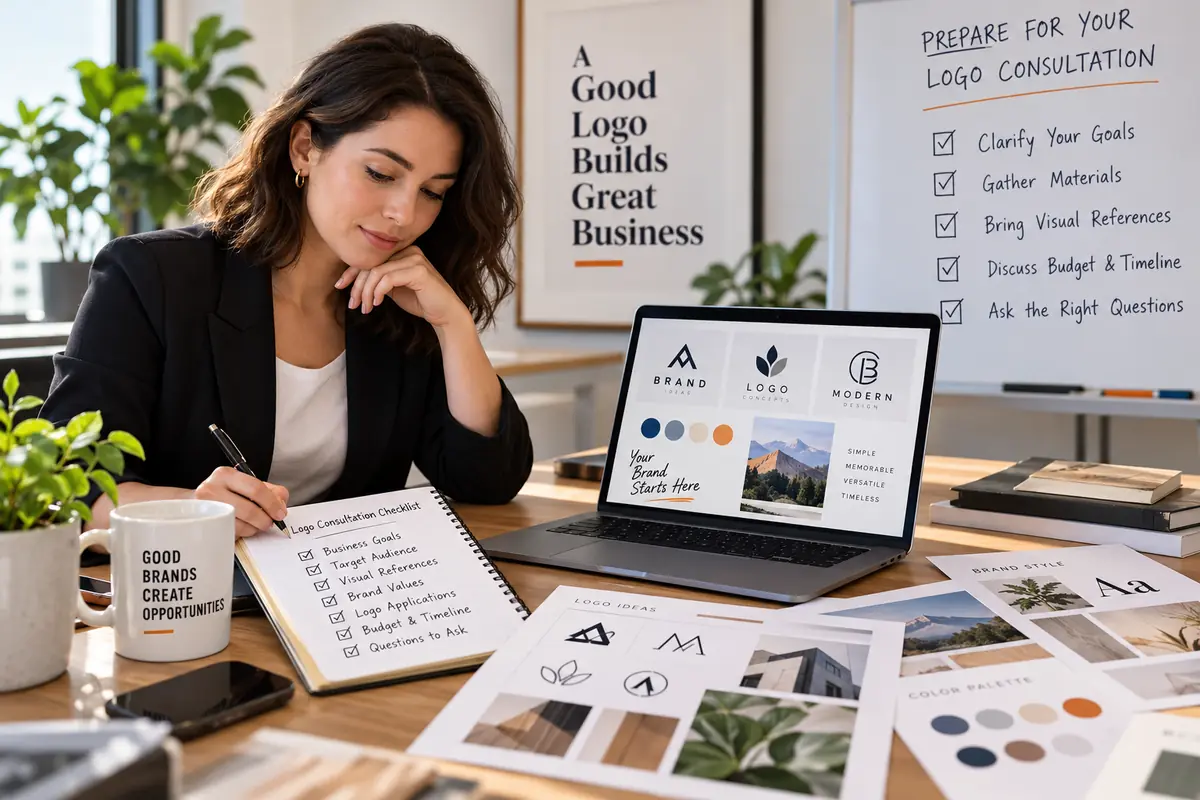
This practical checklist explains what to prepare, what to discuss, and what to confirm before moving forward with a professional logo designer.
1. Define Your Business Goals Before the Consultation
Before discussing visual styles, write down what you want your logo to communicate.
A professional business logo should support your brand's identity and practical business needs. Your consultation is an opportunity to explain those needs rather than expect the designer to guess.
Your Preparation Checklist
Check each item as you prepare for your meeting.
What Should Your Professional Business Logo Communicate?
Consider two hypothetical businesses. Their branding priorities may be very different because they serve different audiences.
Construction Company
A Texas construction company might want its logo to communicate reliability, precision, and experience.
Skincare Startup
A California skincare startup might prefer a calm, contemporary identity that reflects its intended brand personality.
Neither direction is automatically better. Each reflects a different audience and business objective.
Complete This Sentence Before Your Consultation
Bring your completed statement to the meeting. It provides a useful starting point for discussing professional logo design decisions.
2. Prepare Your Business Information and Visual References
A short design brief helps organize the information you want to share with your business logo designer.
It doesn't need to be a complicated document. A single page and a folder of relevant examples are enough to begin the conversation.
Check each item as you gather your materials.
Collect and Explain Your Visual References
When collecting references, explain what appeals to you. For example, you might prefer the typography in one design and the simplicity of another.
Avoid asking a designer to reproduce a competitor's logo. Use examples to communicate preferences rather than provide instructions for imitation.
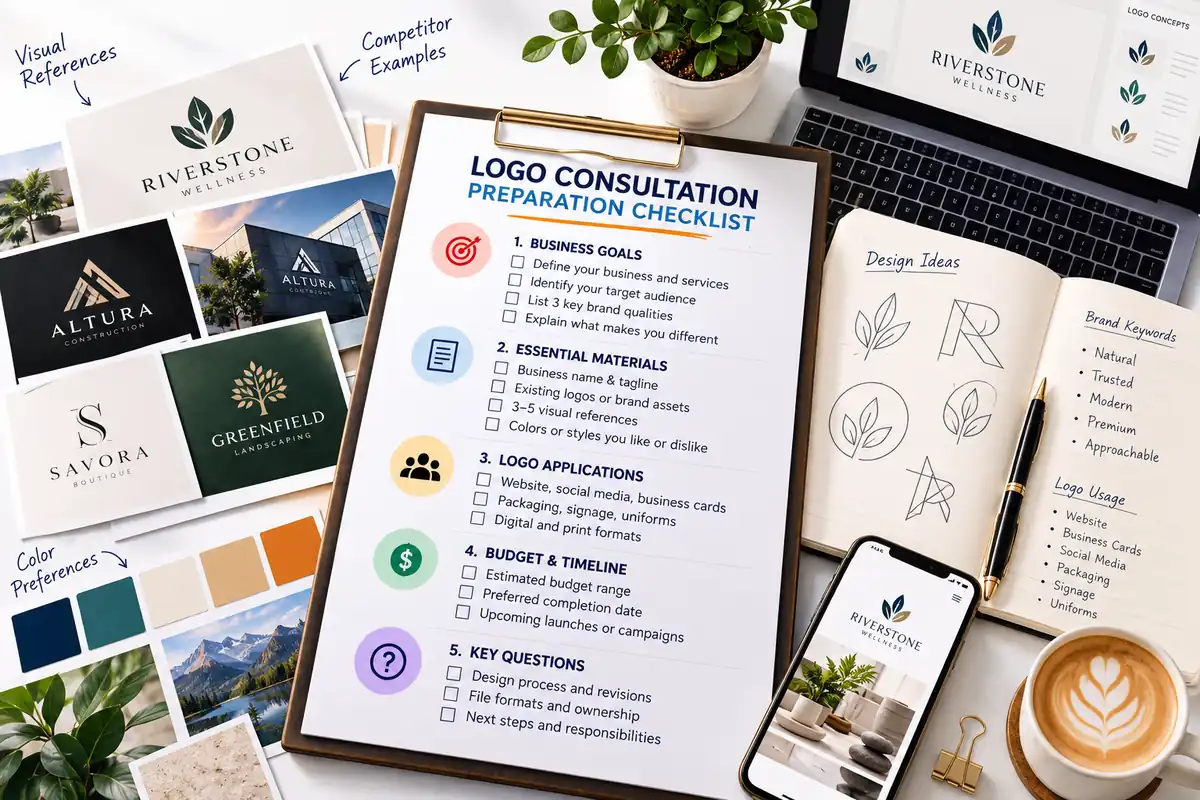
3. Bring Logo Design Inspiration and Online Tool Examples
You may already have experimented with a logo maker website, an affordable logo maker, or another online design tool.
Those experiments can be useful conversation starters.
For example, a website logo maker might help you identify whether you prefer a wordmark, an icon-based design, or a combination of both.
You can explore logo templates to identify visual styles you like. Treat these examples as inspiration rather than a finished brand identity.
Wordmark
A typography-led logo that focuses primarily on the business name.
Icon-Based Design
A symbol-led approach that emphasizes a recognizable visual element.
Combination Mark
A design that combines a business name with a symbol or icon.
Important: A preliminary design should be treated as inspiration rather than proof that a logo is original or available for trademark registration.
Can You Bring a Website Logo Maker Draft to a Designer?
Yes. Bring your draft and explain which elements you like.
Prepare these details before sharing your draft.
If you've used a logo online designer or automated creation tool, tell your designer how the draft was created.
The goal: Communicate your preferences—not require the final design to reproduce your initial experiment.
4. Identify Where Your Logo Will Be Used
Your logo may need to appear in several different sizes and formats.
Discussing these applications in advance helps your designer plan appropriate logo variations and scalable files for both digital and printed materials.
Before your consultation, identify your most important applications.
Select the places where your logo will appear.
Restaurant
A restaurant might need signage, menus, and packaging.
Online Consulting Business
An online consulting business might prioritize its website, presentations, and digital profiles.
These examples help explain why the same logo may need different layouts.
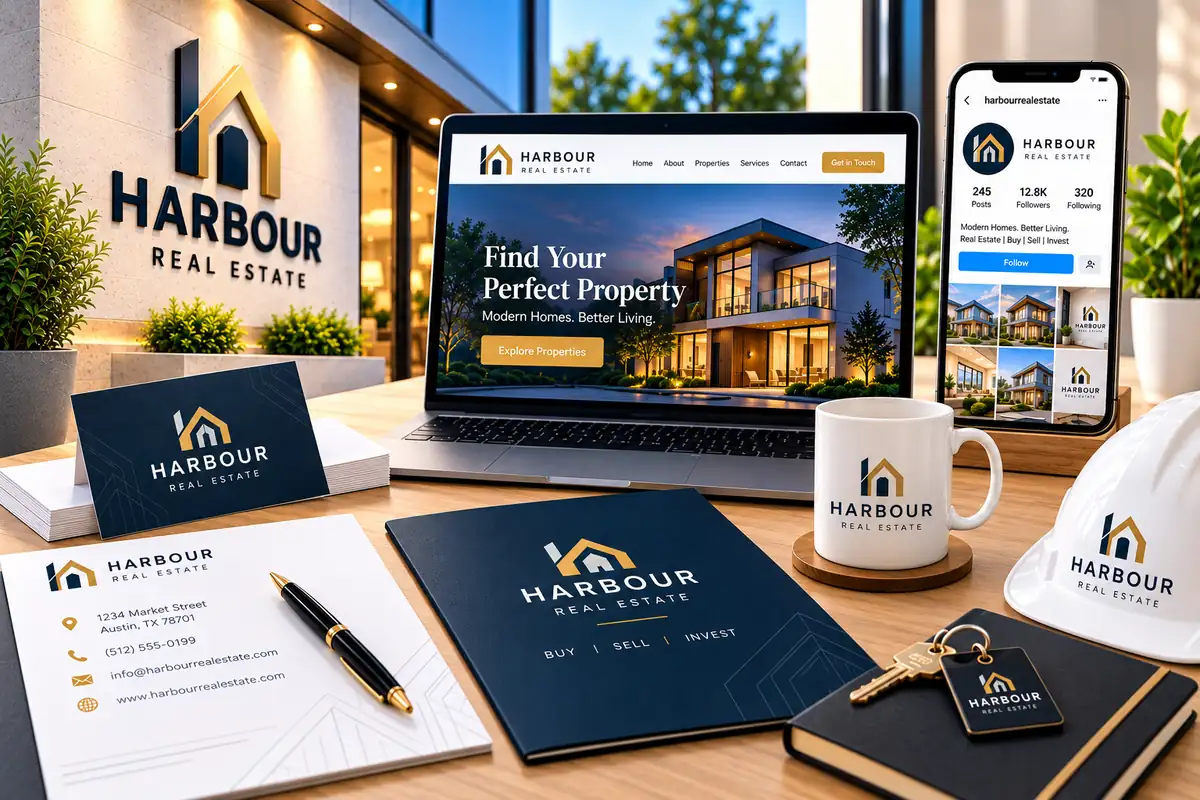
Discuss These Details With Your Designer
- Will I need horizontal and stacked versions?
- What formats should I request?
- Do I need a simplified icon for smaller applications?
5. Review Your Budget, Timeline, and Design Requirements
Before discussing logo design packages, identify your own requirements.
You don't need to arrive with a final price in mind. A working budget range can help you explain the scope you're considering.
Also think about your launch schedule and the people who will approve the design.
Example: If your website is scheduled to launch in six weeks, mention that date and ask whether the proposed design process can accommodate it.
Don't assume every logo design company includes the same deliverables, revision rounds, or timelines.
Ask for the proposed scope in writing before committing.
6. Prepare Questions About the Design Process and Ownership
Your first consultation should help you understand how the proposed project would move from discovery to delivery.
Keep your questions specific to your business rather than turning the meeting into a general agency comparison.
What Should US Businesses Know About Logo Ownership and Trademarks?
Ownership and trademark availability are separate matters.
Under US copyright law, copyright ownership and transfers depend on applicable legal rules and agreements. Commissioning creative work does not, by itself, establish that every copyright belongs to the customer.
Ask your designer to explain the written terms covering ownership, permitted uses, source files, and any third-party assets.
If trademark registration is important to your business, raise the issue before finalizing a design.
A trademark search can help identify potentially conflicting marks before filing. Depending on the circumstances, a comprehensive search may include federal records, state databases, and other publicly available sources.
Important for US businesses: A designer's visual originality assessment is not a substitute for legal trademark clearance. Consider consulting a qualified US trademark attorney when necessary.
7. Plan Your First Logo Consultation in Just 10 Minutes
Your first logo consultation does not always need to be a long meeting. A focused 10-minute conversation can help your designer understand your business, design preferences, budget, and expectations.
Prepare a few basic details beforehand so you can spend less time explaining and more time discussing the right direction for your logo.
Four quick conversations to get your logo project started.
| Time | What to Discuss |
|---|---|
| 0–3 minutes | 01 Briefly explain your business, target customers, and what you want your logo to communicate. |
| 3–6 minutes | 02 Share preferred colors, styles, and one or two logo examples you like. |
| 6–8 minutes | 03 Confirm your approximate budget, deadline, and essential logo requirements. |
| 8–10 minutes | 04 Ask about the design process, expected deliverables, and next steps. |
Time-saving tip: Keep your business name, website (if available), and two or three visual references ready before the call. Detailed design feedback and revisions can be discussed later in the project.
Confirm the next step: whether you need to send any additional information and when you can expect a proposal or project details. A clear 10-minute discussion is enough to establish the initial direction without overwhelming either side.
8. Complete Your Final Pre-Hiring Checklist
After the consultation, review what you discussed before approving a proposal.
If any item remains unclear, request clarification.
A productive first meeting doesn't have to produce a finished logo. Its purpose is to establish enough shared understanding to decide whether and how the project should proceed.
Start Your Professional Logo Design Project With Confidence
Preparing for your first logo consultation doesn't require graphic design expertise.
It requires a clear explanation of your business, thoughtful visual references, realistic project requirements, and questions about how the work will be delivered.
Whether you're starting a new LLC, building an online store, or refreshing an established company, this checklist can help you communicate your expectations before investing in a new identity.
At Digital Zone Consulting, the conversation can begin with your business goals, target customers, and the practical requirements of your logo.
You don't need to arrive with a finished design. Start by explaining what your brand needs to communicate.
Continue Learning
Explore logo styles, branding considerations, and design planning resources.
Learn about searching for potentially conflicting trademarks before applying for federal registration.
A great logo begins with a clear conversation. Prepare with confidence, communicate your vision, and take the next step toward a brand that represents your business.